Online Advertising and Marketing: A Complete Guide for 2026
So here’s the honest truth—the digital world has shifted fast. Really fast.
Online advertising and marketing aren’t optional anymore. They’re the backbone of growth if you want a business that actually survives. Launching something new? Working in marketing? Running a small business from your kitchen table at 11 p.m.? Understanding digital marketing in 2026 isn’t a “nice to have.” It’s mandatory.
The space is crowded. Attention is expensive. Relevance is fragile.
This guide breaks down what online advertising and marketing actually looks like right now—what works, what’s trending, and what tactics still make sense. We’ll start with the fundamentals, then move into more advanced strategies so you can build campaigns that don’t just run… but perform. Real results. Not vanity metrics.
Understanding the Foundation of Online Advertising and Marketing
At its core, online advertising and marketing is the use of digital channels to promote your brand, products, or services to the right people. SEO is imperative in Digital Marketing if your looking to up your SEO game I highly suggest Mangools it’s a full suite of tools that will help your business skyrocket up the rankings on google. Overall online advertising is something you should focus on in 2026.
The difference from traditional marketing is massive:
- Targeting is sharper
- Data updates in real time
- Reach is global
- Budgets are flexible
You’re no longer guessing. You’re adjusting.
Digital marketing includes:
- Search engine optimization (SEO)
- Pay-per-click (PPC) advertising
- Social media marketing
- Content marketing
- Email marketing
- Influencer partnerships
Individually, each channel has value. Together, they’re powerful.
In 2026, AI tools, stricter privacy laws, and changing consumer behavior have rewritten the rules. Brands that adapt quickly—without losing their human voice—tend to win. Simple as that.
The Evolution of Digital Marketing in 2026
Digital marketing didn’t just evolve. It leveled up.
We’ve moved past banner ads and generic email blasts. Today’s focus is on:
- Personalization at scale
- Privacy-first data strategies
- Seamless, low-friction experiences
Artificial intelligence now touches almost everything. Predictive analytics. Automated creatives. Smarter audience segmentation. Machine learning studies behavior patterns and delivers content that feels helpful instead of invasive. Most of the time.
Privacy regulations like GDPR reshaped how data is collected and stored. Third-party cookies are fading out, pushing marketers toward first-party data and contextual targeting. Relationships matter again.
Short-form video continues to dominate attention. Platforms reward authenticity over perfection. And social commerce? It transformed social media into a full buying journey—from discovery to checkout—without ever leaving the app.
Search Engine Optimization (SEO): The Foundation of Organic Visibility
SEO remains one of the strongest ways to drive high-quality, long-term traffic.
It’s about visibility—showing up when people are actively searching for what you offer.
Modern SEO goes far beyond keywords. Search engines now prioritize:
- Page speed
- Mobile experience
- Core Web Vitals
- Search intent
- Content depth and usefulness
If your content genuinely answers questions, you’re already ahead.
AI-powered search and voice queries shifted keyword strategies toward natural language. People search the way they speak now. Your content should reflect that.
Technical SEO still matters:
- Clean site structure
- Structured data
- HTTPS security
- Crawlability and indexing
Regular audits catch issues before rankings drop. Annoying? Yes. Necessary? Absolutely.
Pay-Per-Click (PPC) Advertising: Immediate Visibility and Fast Feedback
PPC advertising puts your brand in front of the right audience—immediately.
You pay for clicks, gain instant visibility, and support your long-term SEO strategy at the same time.
Google Ads remains the dominant platform. Targeting options include:
- Keywords and intent
- Location and device
- Demographics
- Past behavior and interactions
Performance Max campaigns use machine learning to place ads across Google’s entire ecosystem—Search, YouTube, Display, Gmail. The system finds what converts and doubles down.
Display and programmatic ads expand reach beyond search, buying placements in real time and optimizing automatically.
Retargeting is especially powerful. Reaching people who already visited your site keeps your brand top of mind—and conversions often follow. Because reminders work.
Social Media Marketing: Community, Content, and Conversions
Social media marketing has grown up.
It’s no longer just about posting consistently. It’s about strategy, storytelling, and outcomes. Each platform behaves differently, so content must fit how people actually use it.
- Facebook & Instagram support discovery, research, and full in-app shopping
- TikTok thrives on authenticity—small accounts can explode overnight
- LinkedIn dominates B2B with thought leadership and trust-based content
- X (Twitter) remains fast-paced and conversational, perfect for real-time engagement
The brands that win here don’t interrupt. They participate.
Content Marketing: Creating Value That Converts Over Time
Content marketing plays the long game.
Instead of pushing products, you educate, help, and build trust first. Conversion follows later.
Effective content includes:
- In-depth blog posts and guides
- Video tutorials, demos, and testimonials
- Behind-the-scenes and storytelling content
Podcasting continues to grow because it fits naturally into daily life—commutes, workouts, downtime. Interviews help brands borrow credibility and expand reach.
Interactive content like quizzes, calculators, and assessments increases engagement and captures first-party data. That’s a win on both sides.
Email Marketing: Still One of the Highest ROI Channels
Email marketing refuses to die—and for good reason.
When done right, it delivers some of the highest ROI in digital marketing.
The key is ethical list growth. Lead magnets like:
- Free tools
- Templates
- Ebooks
- Mini-courses
…attract people who actually want to hear from you.
Segmentation and personalization drive results. Automation tools tailor emails based on behavior, timing, and interests.
Welcome sequences set expectations. Automated flows nurture leads, recover abandoned carts, and re-engage inactive subscribers quietly—but effectively.
Deliverability matters. Authentication, sender reputation, and list hygiene determine whether your emails get opened… or ignored forever.
Influencer Marketing: Trust Scales Faster Than Ads
Influencer marketing is no longer experimental. It’s mainstream—and measurable.
Micro and nano influencers often outperform big names. Smaller audiences. Higher trust. Better engagement.
Authenticity is non-negotiable. Forced partnerships fail fast.
Long-term collaborations outperform one-off posts because familiarity builds credibility.
And measurement matters. Focus on:
- Engagement quality
- Conversions
- Brand lift
Follower counts alone don’t tell the story.
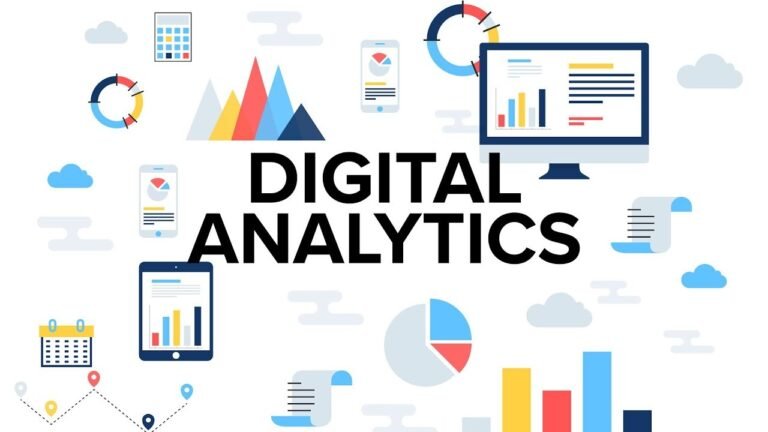
Marketing Analytics: Turning Data Into Direction
Analytics turn marketing from guesswork into strategy.
GA4 tracks user behavior across devices using event-based data. Powerful—but only if you understand it.
Attribution models show how different touchpoints contribute to conversions. Multi-touch attribution beats last-click every time.
Dashboards simplify decision-making. One view. Clear insights.
A/B testing fuels growth. Test headlines. Test creatives. Test offers. Measure. Adjust. Repeat.
Emerging Trends Shaping Digital Marketing’s Future
Digital marketing doesn’t slow down—it shifts.
Key trends to watch:
- AI-driven content and optimization
- Conversational marketing via chatbots
- AR and VR product experiences
- Sustainability and ethical branding
- First-party data strategies as cookies disappear
Direct relationships are becoming more valuable than ever.
Building an Integrated Digital Marketing Strategy
Integration is the difference between chaos and clarity. Your channels shouldn’t compete. They should support each other.
Start with:
- Clear objectives
- Defined target audiences
- A mapped customer journey
Online Advertising is Balance short-term wins with long-term brand building.
Test often. Adapt quickly. Markets change—and so should your strategy.
Conclusion
Online advertising and marketing in 2026 offers massive opportunity—and real challenges. Technology evolves. Consumer expectations rise. Rules keep changing. The brands that succeed combine data, creativity, and genuine connection. Tools matter, Helium 10 is a Amazon Tool that will help you sell six figures on Amazon, but value matters more.Integrated strategies create seamless experiences. Relationships outperform transactions. Stay adaptable. Keep learning. Focus on real value. That’s how businesses grow—even now. If you enjoyed this post click here to read more.



One Comment